
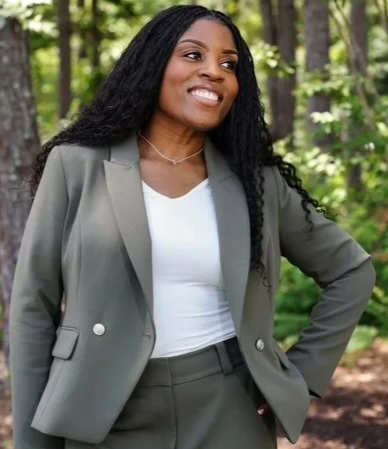
Andrea is a graduate of an MA program herself, and she has also hired, trained and led the graduates programs produce. That combination is why she knows precisely where the gap sits between what students learn and what employers expect.

Is the placement range among graduates, but placement measures only entry-level employment. Career advancement beyond that point is not tracked by anyone.
Is the graduation range across MA programs.
Career paths reachable from the MA certification your program already grants, most graduates never learn this.
Value-based care in plain language, workplace professionalism and communication, demonstrating skills in an interview rather than describing them, compensation negotiation, and the advancement path from day one.
Bring real workforce experience directly into your program or event.
Mock interview panels, student office hours, resume and LinkedIn workshops.
Curriculum review and workforce development consulting, available independently or inside a partnership.
Placement measures whether a graduate found a job, it does not measure whether they built a career. Programs that support advancement produce graduates who stay in the field and speak well of where they trained.
Value-based care in plain language, workplace professionalism, interviewing, resume and LinkedIn, compensation negotiation, and career path mapping, the material students need the week after graduation.
Virtually, by cohort or by individual session. In-person is available with travel billed separately.
Yes. Curriculum review and workforce development consulting are available independently or inside a partnership.
Placement measures whether a graduate found a job. It does not measure whether they built a career. Programs that support advancement produce graduates who stay in the field and speak well of where they trained.
Two things decide that, and most curriculum covers neither.
The first is value based care. Medicare is moving to it on a deadline. CMS set a goal for every person in Traditional Medicare to be in an accountable care relationship by 2030, and that number was already 53.4 percent in January 2025. The work behind it lands on the care team. Panel management. Gap closure. Quality measures. Patient outreach. Employers are already assigning that work to medical assistants. 54 percent have MAs doing phone triage. 29 percent have MAs doing health coaching. 26 percent have MAs running panel reports. 52 percent say medical assistants need more advanced skills than they used to. Students graduate without a word for any of it.
Your graduate should be able to sit in an interview and say “I learned value based care in my program. I know what a quality gap is. I know how a panel report works. I know why my documentation moves a STAR rating.”
The second is professionalism. It is the number one reason a graduate loses the job you helped them get. Employers say only 59 percent of newly certified medical assistants are ready to perform the job well, and the skills they name as most lacking are critical thinking, professionalism, and verbal communication. None of those are clinical. All of them are teachable.
The field is growing 13 percent through 2035 with about 109,700 openings a year. There is no shortage of jobs. There is a shortage of graduates who can hold one, speak up in a huddle, take correction, and represent your program well inside someone else’s clinic.
That is what we teach. Not as a lecture on the last day. As a skill.
Tell me a little about what you’re working on. I read every message myself.
I typically respond within 1–2 business days.